
Confused about whether to use “totalling” or “totaling” in your writing? These two words might seem pretty similar, but there’s a slight twist: it depends on where you’re writing from! In British English, you’d lean towards “totalling,” while in American English, it’s more common to see “totaling.” Despite this regional difference, they both mean the same thing: adding up or calculating a total. Let’s dig into these differences a bit more to make sure you’re on the right track.
What do “Totalling” and “Totaling” Mean?
“Totalling” and “totaling” as a verb mean adding numbers together to get a total. Both come from the word “total” and show ongoing action, like when you’re still adding things up. They’re like saying “I’m totaling” or “I’m totalling” while you’re doing the math. Despite spelling differences, they’re just different ways of saying the same thing—adding up numbers. Both forms serve as the present participle of the verb “total,” which means they describe the continuous action of combining numbers. And, you might see “totalling” more in British English and “totaling” more in American English, but they work the same way.
As a Noun
“Totalling” or “totaling” refers to the sum or final amount obtained by adding numbers together.
As an Adjective
“Totalling” or “totaling” describes something that pertains to or involves the process of adding numbers to find a total.
You will like: Acclimate vs Acclimatize vs Acclimatise: Pick the Right Verb
“Totalling” or “Totaling”: What’s the Difference?
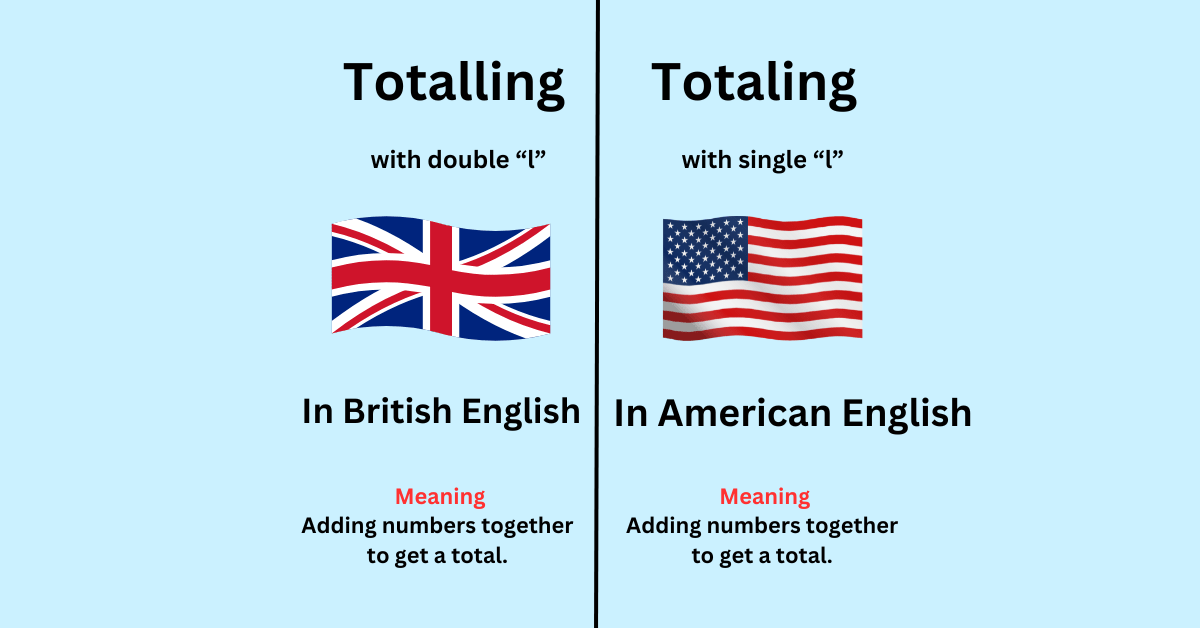
The difference between “totalling” and “totaling” lies primarily in their spelling conventions based on regional variations in English. “Totalling” with a double “l” is the preferred spelling in British English, while “totaling” with a single “l” is more common in American English. Despite this distinction, both forms have the same meaning and usage, referring to the process of adding up or calculating a total. Therefore, the choice between “totalling” and “totaling” typically depends on the writer’s adherence to specific linguistic norms or style guides.
| Totalling (British English) | Totaling (American English) | |
| Spelling | Double “l” | Single “l” |
| Regional Preference | British English | American English |
| Meaning | Adding up numbers to find a total | Adding up numbers to find a total |
| Usage | Common in British English writing | Common in American English writing |
Why there is Confusion Between “Totalling” and “Totaling”?
The confusion between ‘totalling’ and ‘totaling’ started in the early 20th century when American English decided to change how some words ending in ‘l’ were spelled. This was part of a push to simplify spellings. So, in British English, you’d see ‘travelling,’ but in American English, it became ‘traveling.’ The same thing happened with ‘totalling,’ which changed to ‘totaling.’ This difference in spelling caused confusion, especially as English spread around the world and people encountered both versions.
A Simple Trick to Get Rid of Confusion
Think of “totalling” with a double ‘l’ as resembling the British currency, the shilling. Since both “totalling” and “shilling” contain double ‘l’s, you can remember that “totalling” is the British spelling. This simple trick can help you recall the correct spelling and avoid confusion.
You will like: Center vs Centre: Decoding the Spelling Difference
Synonyms of “Totalling” or “Totaling”
- Adding up
- Summing
- Tallying
- Counting
- Calculating
- Summarizing
- Adding together
- Tabulating
- Aggregating
- Computing
Using “Totalling” and “Totaling” in Sentences
Totalling:
- She spent the afternoon totalling up the expenses for her trip to Europe.
- The company’s quarterly earnings report showed profits totalling over $1 million.
- The student was diligent, totalling his study hours to ensure he met his goals.
- The restaurant manager was busy totalling the day’s sales before closing time.
- The scientist conducted experiments, totalling hours of careful observation and analysis.
Totaling:
- The accountant is currently totaling the company’s annual expenses for tax purposes.
- The construction project’s budget is totaling more than expected due to unforeseen delays.
- The detective is totaling the evidence collected at the crime scene to build a case.
- The car mechanic is totaling the cost of repairs needed to get the vehicle back on the road.
- The wedding planner is totaling up the expenses for the ceremony and reception to stay within budget.
You will like: Traveler or Traveller: Which Spelling is Right?
A Final Look
In wrapping up, the difference between “totalling” and “totaling” isn’t huge, but it’s there. In British English, they tend to double up on the letters with “totalling,” while in American English, it’s just one “l” in “totaling.” But really, they both mean the same thing: adding up numbers to find a total. Knowing this can help you write in the style that fits where you’re from and make sure your writing makes sense to others. So, whether you’re using “totalling” or “totaling,” the aim is to get the numbers right and add them up correctly.
Sources
Cambridge Dictionary (TOTALLING | definition in the Cambridge English Dictionary), Grammarist (Totaled/totaling vs. totalled/totalling) and Thesaurus.com (54 Synonyms & Antonyms for TOTALING).